
Lake Michigan Steelhead Fly Fishing: Late Fall Basics
Chase Steelhead This Season
Fish the river with a local guide who teaches you how. Book your trip today!
Published:
Updated:
When the leaves drop and the air turns sharp, a lot of anglers in southwest Michigan put their rods away. The ones who keep fishing are often chasing steelhead. These are strong, chrome-bright fish that come out of the big lake and push into the rivers of the Lake Michigan region, and they make late fall and winter one of the most rewarding times to be on the water with a fly rod.
Jon Chizmadia guides fly fishing trips out of St. Joseph, MI under the name St Joe Angler, and steelhead are one of the species he guides for. This article covers why these fish suit the fly rod, how to think about the cold months, and what a newer angler should understand before the first trip.
Why Steelhead Become a Late Fall and Winter Target
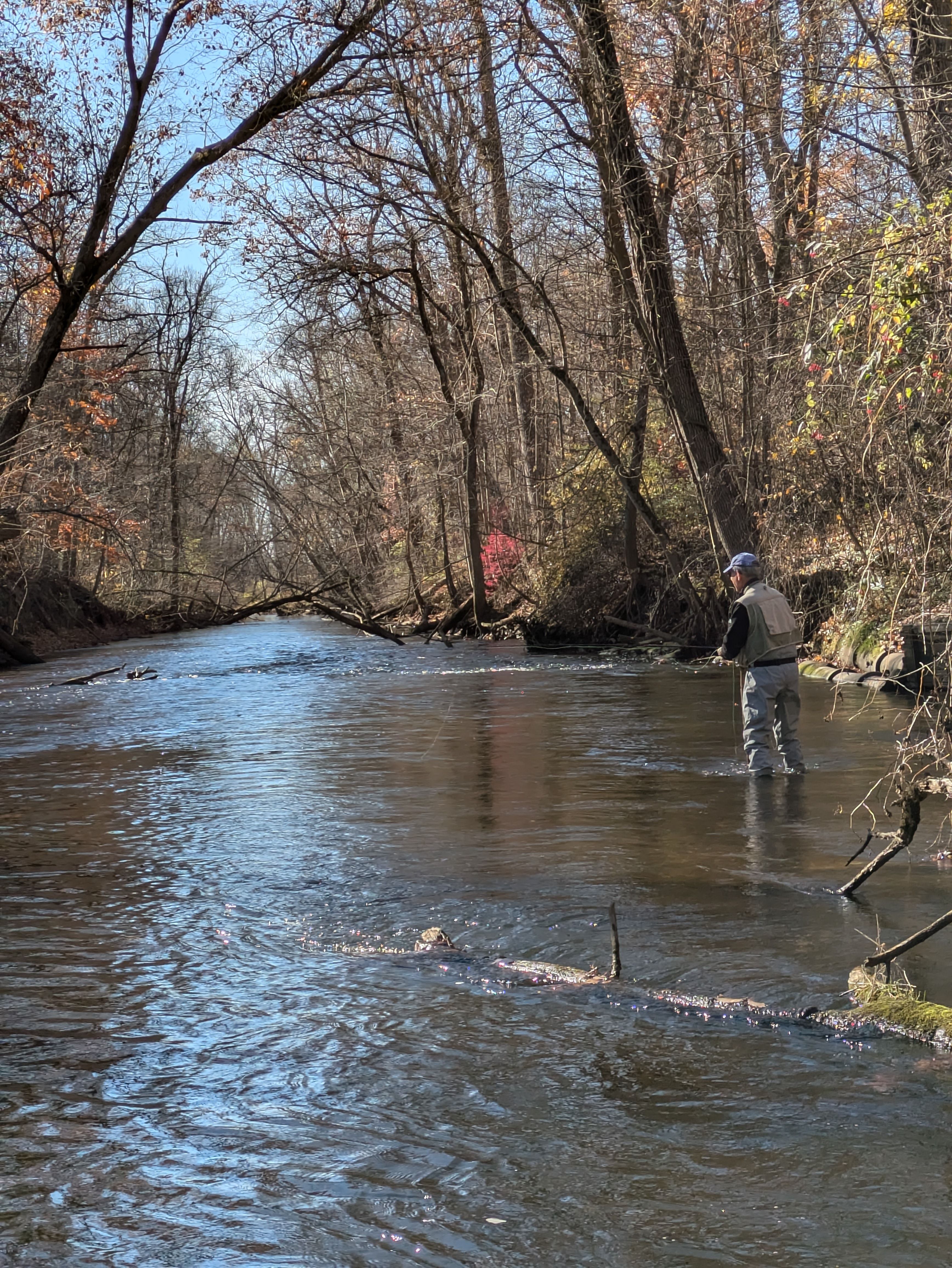
Steelhead are a river fish for anglers in the Lake Michigan region, and the colder months are when many people go after them. Instead of staying out in open water, they move into the rivers, which puts them within reach of someone standing on the bank or working a drift from a boat. That shift is the reason steelhead are a cold-weather conversation at all. The fishing season does not end when summer does. It changes.
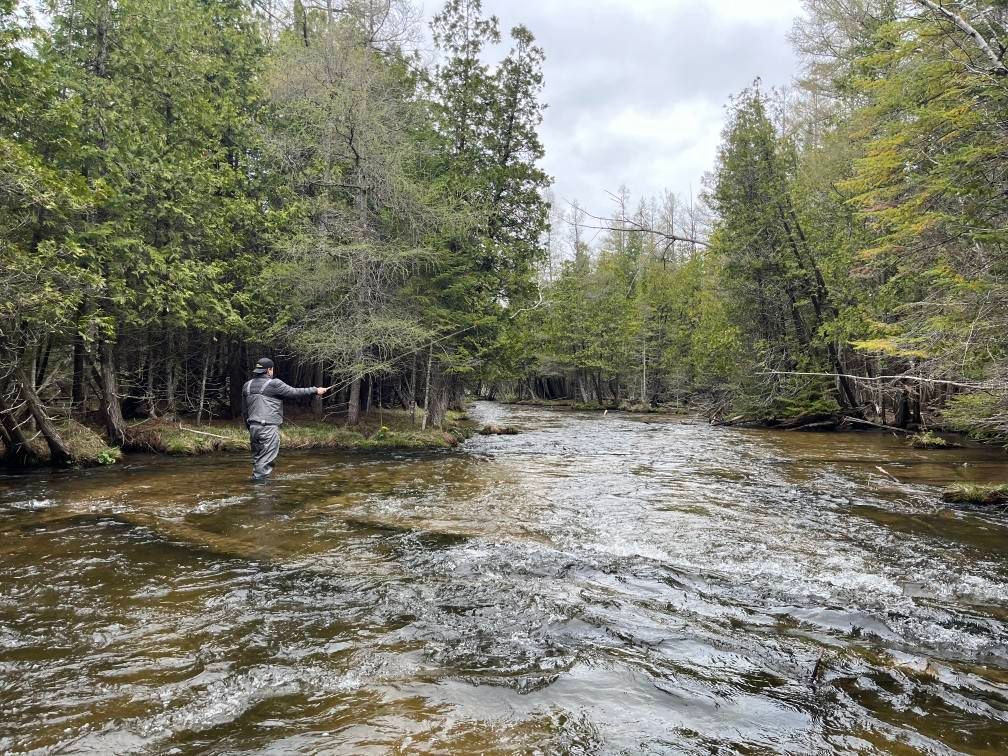
For anglers who enjoy summer smallmouth or trout, steelhead extend the year. Late fall fishing gives you a reason to keep your gear ready and your casting sharp while others have called it a season. It is also quieter on the river in these months, which many anglers count as a plus.
What Makes Steelhead a Great Fly Rod Fish
Steelhead have a reputation, and it comes from how they fight. They are powerful, they run, and they tend to test your tackle and your patience in the same fight. A fly rod makes all of that more personal. You feel the pull through a light rod and a line you are managing by hand, and every second of the fight asks something of you.
There is also a challenge in finding them. Steelhead are not a fish you stumble into by luck on a random cast. You read the water, think about where a fish would hold, and present the fly in a way that makes sense for the conditions. Landing one feels earned because the work leading up to it was real.
That mix of power and puzzle is why fly anglers keep coming back to them. Even a day without a hookup teaches you something about water, depth and presentation that carries over to other fish.
What Newer Anglers Should Understand Before Heading Out
The first thing to accept is that steelhead fishing asks for patience. This is not a numbers game. A good day might be a handful of quality chances, and a slower day might be one or none. Going in with that expectation makes the whole trip more enjoyable, and it keeps you focused on learning instead of counting fish.
Here are a few things worth thinking about before your first outing:
- Dress for the cold. Late fall and winter on a river means wind, wet hands and long stretches of standing still, so layers and warm, waterproof gear matter.
- Practice your casting first. Spending an hour on grass before the trip makes the river time far more productive.
- Learn to read water. Seeing where current slows, deepens or breaks around structure is half the skill.
- Keep your expectations realistic. A strong fight, a good drift and a better understanding of the river are all worth taking home.
None of this means you need years of experience to start. It means a little preparation, plus a willingness to learn on the water, goes a long way. Many new anglers find that one day with someone who knows the river saves them a lot of trial and error.
Learning From a Local Guide
Jon's approach to guiding is built around teaching. He has been guiding fly fishing trips for over seven years and previously taught at the Michigan Fly Fishing School, where he worked on breaking techniques down so anglers of all skill levels could follow them. His philosophy is simple: he teaches guests to fish rather than just handing them a catch.
That fits steelhead well, because the skills here are learnable. Reading a run, setting up a drift and managing your line are all things a guide can show you in real time, with the river in front of you. Jon works with first-time casters as well as experienced anglers, and he tailors each trip to what the guest wants to learn.
St Joe Angler offers guided river fishing trips for up to two people in two formats: a 4-hour trip and an 8-hour trip. A shorter outing can work as an introduction to the river and the basics of the fly rod. A full day gives you more time to work different water and practice what you pick up along the way.
Making the Most of the Season
Late fall is a good time to start, because the season is moving toward winter and the steelhead are in the river. Treat your first trip as a chance to build a foundation: how to cast, how to read the water, how to stay comfortable in the cold. Those skills stay with you for every season after.
If you are curious about steelhead fishing in Michigan and want to try fly fishing for steelhead with someone who teaches as he guides, a day on the river with St Joe Angler is a good place to begin.
